
Passionate about helping children living in poverty. I am a children's book author & social worker. Proverbs 16:24
Author: crinamorpho
Hello,
I am Crina Andreea, born in Romania, moved to London in 2018.
I love working with vulnerable kids and their families.
Focusing on education, parenting, mental health, wellbeing, and improving the lives of children living in poverty.
Raised as a child in a disadvantaged family, this is what made me stronger in this unfair world. Sharing my experiences to encourage young people to believe in themselves is what I love doing.
Attachment is characterized by specific behaviors in children, such as seeking proximity to the attachment figure when upset or threatened (Bowlby, 1969).
Stages of Attachment
Rudolph Schaffer and Peggy Emerson (1964) investigated if attachment develops through a series of stages, by studying 60 babies at monthly intervals for the first 18 months of life (this is known as a longitudinal study).
The children were all studied in their own home, and a regular pattern was identified in the development of attachment.
The babies were visited monthly for approximately one year, their interactions with their carers were observed, and carers were interviewed.
A diary was kept by the mother to examine the evidence for the development of attachment. Three measures were recorded:
• Stranger Anxiety – response to arrival of a stranger.
• Separation Anxiety – distress level when separated from carer, degree of comfort needed on return.
• Social Referencing – degree that child looks at carer to check how they should respond to something new (secure base).
Bowlby suggested that a child would initially form only one primary attachment (monotropy) and that the attachment figure acted as a secure base for exploring the world.
The attachment relationship acts as a prototype for all future social relationships so disrupting it can have severe consequences.
This theory also suggests that there is a critical period for developing an attachment (about 0 -5 years).
If an attachment has not developed during this period, then the child will suffer from irreversible developmental consequences, such as reduced intelligence and increased aggression.
I work with children with learning difficulties and I can tell you it’s fun and challenging at the same time but is so rewarding.
Autism is a lifelong developmental disability that affects how people communicate and interact with the world. One in 100 people is on the autism spectrum.
Autism is not an illness
Being autistic does not mean you have an illness or disease. It means your brain works differently from other people.
It’s something you’re born with or first appears when you’re very young.
If you’re autistic, you’re autistic your whole life.
Some autistic people have average or above-average intelligence.
Some autistic people have a learning disability. This means they may find it hard to look after themselves and need help with daily life.
Please note, this post it’s just a short version of it, the ASD is a very broad subject.
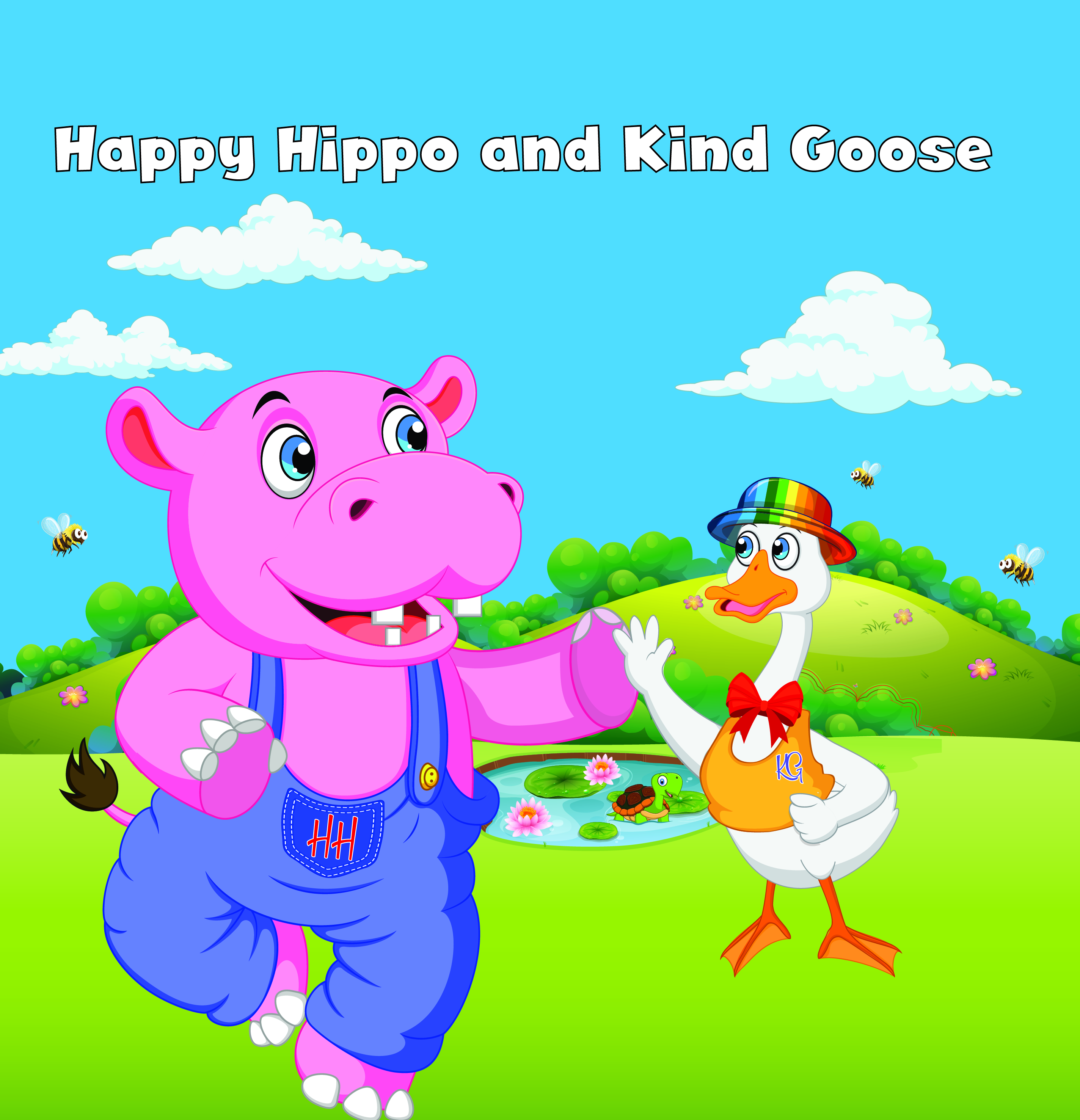
My absence from the blog is very well explained and comes with a surprise. My children’s book Happy Hippo and Kind Goose is available on kindle edition on Amazon.co.uk. Soon paperback will be available. If you want your children, grandchildren to have a great laugh and learn about friendship, kindness, happiness, then order a copy now.
Bee thankful Bee courageous Bee faithful Bee the change you wanna see in the world Bee an inspiration for someone in need Bee compassionate and BEE KIND
Humility is the quality of being humble. Being humble is the opposite of being proud!
Children need to know that achievements, social status, and abilities are not what give them worth.
What is even sadder is that children are being targeted by the pride monster. Social pressure is killing them. Constantly they have to promote themselves on social media and keep comparing themselves with their peers.
Humble children understand that all children have the same inherent worth as themselves. Help your children develop humility by:
Spending time together, be an example for them, show humility
Spend time outdoors
Teach a growth mindset
Encourage relationship with the people in their life