#children

Parent life at 7am

This morning my daughter woke up asking for an ice lolly.

I said, “Tell you what… go and look out the window. If you can spot anyone outside this early on a Sunday morning, I’ll give you one.”

She ran to the window… looked everywhere… and came back.

“No one”

Exactly. 😂 I know my neighbours routines
Then the negotiations began…

She said, “Let’s do puzzles!”

So I negotiated back:
“How about you watch Bluey while Mummy gets 10 more minutes of sleep?”

Deal accepted. 🤝

Ten minutes later she came back with another request:
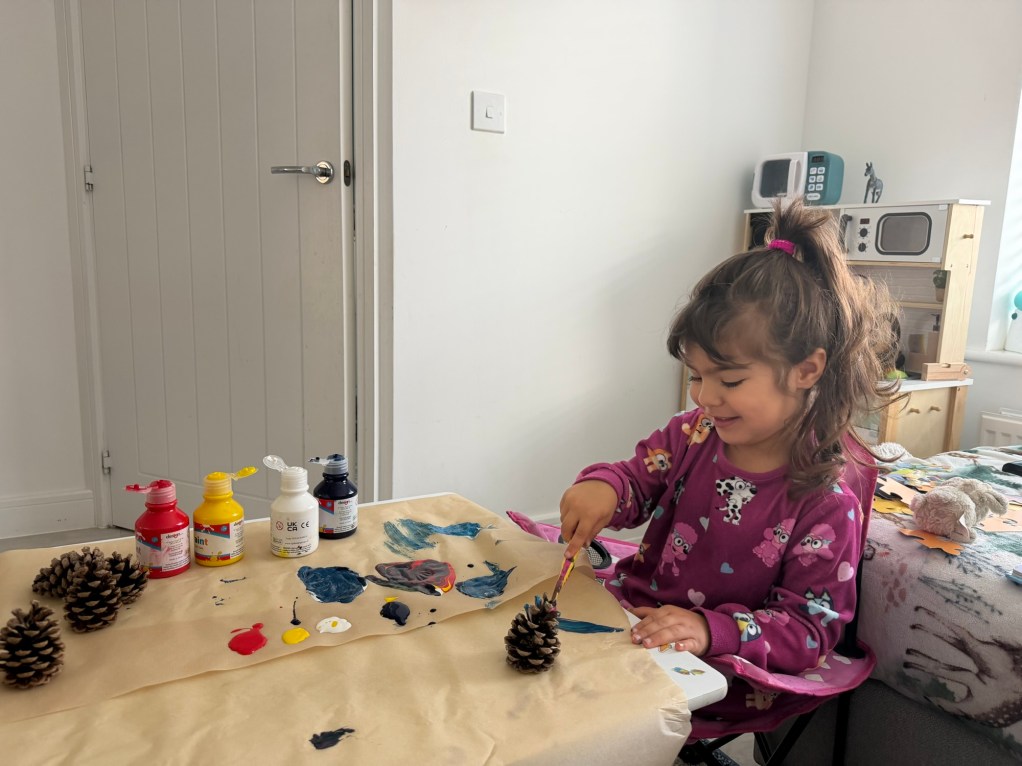
“Can we paint pine cones?”

And just like that… here we are at 8:10 a.m., painting pine cones in our pyjamas. 🎨🌲

Motherhood is full of tiny negotiations, unexpected craft sessions, and coffee that somehow always goes cold. I wouldn’t have predicted this start to the day, but seeing her smile makes it all worth it.

Parenting is basically working for a tiny CEO who changes the meeting agenda every 10 minutes.
#children

Pretzels

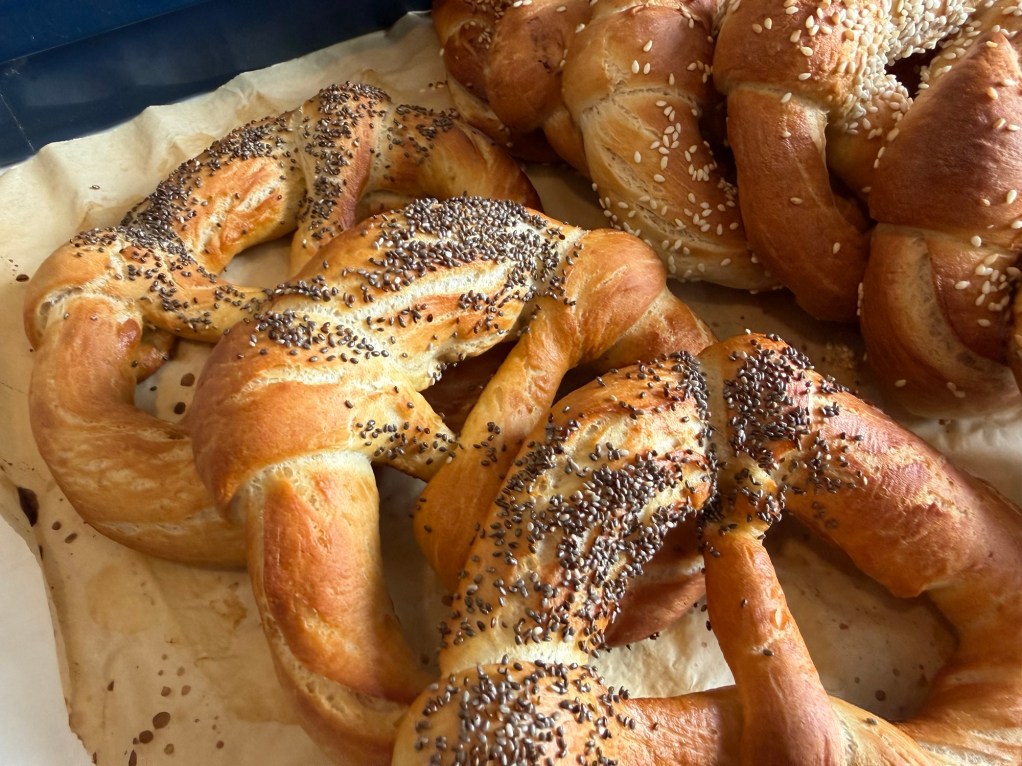
Making pretzels brings back special memories for me because it was actually my first paid job when I was around 16 years old. Back then, I learned not only how to make fresh, delicious pretzels but also the value of hard work and dedication. Years later, that experience still holds a special place in my heart, and I continue to share the same passion for making pretzels today. It’s amazing how something that started as a first job grew into a lasting appreciation for a craft I still enjoy.
#children, #copiii, #dad, #development, holiday

First time parents – Holiday edition

Nappies, wipes, breast pump…

Oh, wait, what else… feels like I forgot to pack something! This is what I have been asking and checking weeks before actually flying out with our baby Amelia. Being a first-time parent comes with lots and thousands of worries/minutes, especially when travelling.
We’ve visited our families, friends in Romania for 13 long and tiring days. Baby Amelia was the main character on this holiday, treated like a princess by her grandma, uncles, aunts, cousins, godmother/godfather, our friends, and lots of ‘tanti de la țară’ grannies ( Grandma’s friends). Amelia had her moments when she was happy going from one person to another, but towards the end of the holiday she’s had enough, didn’t want to go to someone else apart from Mommy and Daddy, which was sad for Grandma.
I like being on time when a time is set for a meeting, it doesn’t matter if it’s a friend or a stranger, BUT this holiday I had to break this rule as Amelia was falling asleep or pooing at the ‘wrong time’. With a child you have 99 per cent to be late, that’s what I have learnt this holiday.
Amelia did amazing flying for the first time; smiling, being curious about what happens around her, grabbing and pulling everything it came to her hand…
I found it quite difficult to change her on the aeroplane because the change table/space is cramped! Oh, she managed to have a big explosion exactly when we landed and of course, the bathrooms were locked…so good luck to me trying to cover her not to stain my clothes, the smell was… I can’t describe it!
In conclusion, this holiday was full of surprises and different. Our next holiday will b in 2 months, going to Greece!

#children, #development

Keep them close by letting go

Last year I enrolled on a CPD course called Positive Parenting.
I recommend this course to anyone working with children, parents, carers, anyone who comes in contact with children.
It comes in handy now that in less than a week I will be on the road called ”parenting”

This is a lesson I read many times because I found myself and some friends caught in this ”story”.

Being too restrictive builds up resentment and can lead to rebellion- let go of them.

Helping our children make their own decisions and choices instead of telling them what to do it’s far more beneficial. Let them decide with guidance.

Of course, if a child is very young and in danger, we are not going to let them do something that would obviously be harmful, that’s why we are there to supervise, guide, teach them.

Help them develop independence, self worth and self confidence

When I was a child, my parents never taught us any self confidence or worth but a form of ”crazy” independence. Growing up I taught myself how to be confident, know my worth.

  • Ask for their opinion and show you value it by acting on what they say at least some of the time.
  • Encourage them to think for themselves, share opinions and options. This will help them to problem solve.
  • Help them feel included and and confident to contribute. This is essential for teaching them to value their opinions, self confidence and self worth,

Like I said, if you wanna expand your knowledge, skills do this course, it’s amazing how will make you remember of your childhood, your parenting styles or your parents tyoe of parenting.

#children, abuse, parenting, risk factors

What are the risks associated with child abuse

Immediately, it might be argued that any child is vulnerable to abuse because by their nature, a child’s age makes them more susceptible to being taken advantage of than most adults. However, there are some groups of children who, for various reasons, will be more likely to be abused than others.

It is important to keep in mind when referring to vulnerability to child abuse that a risk factor it just that – a risk only. Children may face one or more risk factors but this does not mean that it is inevitable that they will become a victim of abuse, as this is not the case at all.

What a risk factor does mean though is that a child who does have one or more of them should be closely monitored and, wherever possible, enabled and encouraged to speak up about their difficulties as enabling children to communicate more freely means that should an instance of abuse occur, they may be more confident to report what is happening to them.

Some of the risk factors that make children more susceptible to abuse include:

  • Disability
  • Has a parent who has substance or alcohol misuse issues
  • Isolationchildren who are isolated, perhaps due to disability or mental health difficulties are more susceptible to abuse as they have less opportunity to report abuse.
  • Lives in a household where there is domestic abuse
  • Age

Neglect is a form of child abuse but it appears that there are specific risk factors which increase a child’s likelihood of experiencing neglect, which include:

Poverty

Lack of support

 Living in a difficult environment- where there is deprivation and high rates of crime in the local area. It is known that children who live in deprived areas have a greater chance of abuse and of being subject to a child protection plan or being taken into care.

#children, #development

Mary Ainsworth | The Strange Situation 

The strange situation is a standardized procedure devised by Mary Ainsworth in the 1970s to observe attachment security in children within the context of caregiver relationships. It applies to infants between the age of nine and 18 months.

The procedure involves series of eight episodes lasting approximately 3 minutes each, whereby a mother, child and stranger are introduced, separated and reunited.

John Bowlby (1969) believed that attachment was an all or nothing process. However, research has shown that there are individual differences in attachment quality. Indeed, one of the primary paradigms in attachment theory is that of the security of an individual’s attachment (Ainsworth & Bell, 1970).

Ainsworth (1970) identified three main attachment styles, secure (type B), insecure avoidant (type A) and insecure ambivalent/resistant (type C). She concluded that these attachment styles were the result of early interactions with the mother.

A fourth attachment style known as disorganized was later identified (Main, & Solomon, 1990).

Main, M., & Solomon, J. (1990). Procedures for identifying infants as disorganized/disoriented during the Ainsworth Strange Situation. In M.T. Greenberg, D. Cicchetti & E.M. Cummings (Eds.), Attachment in the Preschool Years (pp. 121–160). Chicago, University of Chicago Press.

Photo by Anna Shvets on Pexels.com
#children, #copiii, #development, DIVERSITY, equality, inclusive

Inclusive Education

Inclusion in education refers to all students being able to access and gain equal opportunities to education and learning.

Inclusive education is the most effective way to give all pupils a fair chance to go to school, learn and develop the skills they need to thrive. It means real learning opportunities for groups who have traditionally been excluded, not only children with disabilities, but speakers of minority languages too.

Some of the benefits of inclusive practice include:

  • Teaching pupils about diversity and equality.
  • Improving, encouraging friendships between diverse children (Diversity)
  • Promoting parental confidence that their children are being accepted and can be successful in the school setting.#

An estimated 240 million children worldwide live with disabilities. Like all children, children with disabilities have ambitions and dreams for their futures. Like all children, they need quality education to develop their skills and realize their full potential.

Yet, children with disabilities are often overlooked in policymaking, limiting their access to education and their ability to participate in social, economic and political life. Worldwide, these children are among the most likely to be out of school. They face persistent barriers to education stemming from discrimination, stigma and the routine failure of decision makers to incorporate disability in school services – Source UNICEF

#children, #development, kindness

Pure Kindness

Kindness is grace.

Kindness comes from the Old English word ‘kyndnes’ meaning ‘nation’ or ‘produce, increase’. The word is further derived from the Middle English word ‘kindenes’ meaning ‘noble deeds’ or ‘courtesy’. The first recorded use of the word kindness was in the 14th century.

We are humans, and therefore, we make mistakes. We can be kind in our response to ourselves and others when those mistakes occur. This means thinking before speaking, forgiving before seeking revenge, isn’t this a verse from the bible?

Kindness is — and always will be — one of the most beautiful acts for good that exists in the entire world. But remember being kind is a choice we all make as individuals.

If you are a parent you might consider teaching your baby pure kindness from an early age. Encouraging kindness in the early grades helps children increases happiness and decreases stress. 

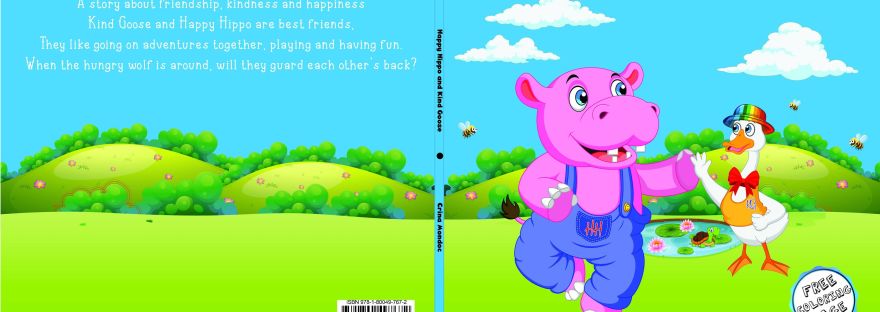
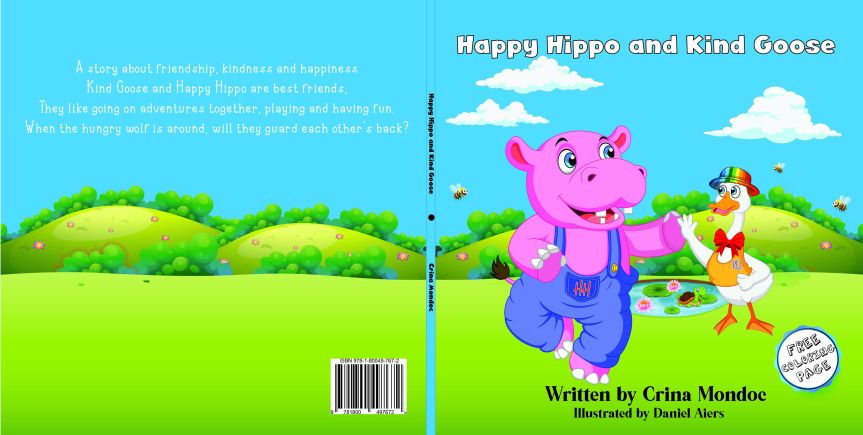
The book Happy Hippo and Kind Goose can be a perfect tool for your kids to understand the values of being kind, having a good friendship and happiness comes as a gift.

Purchase the book from here:

http://www.moncojbooks.com

#children, #copiii, #parents, #uk, carti pentru copii

Cum să publicați o carte pentru copii – Londra

Happy Hippo și Kind Gose este cărticica pe care am publicat-o in Iulie 2021 în Londra.

Scriu această postare deoarece multe persoane m-au contactat pentru a le da câteva sfaturi, raspunde la întrebări.

Cartea mea este publicată de o editură independenta, asta înseamnă 100% drepturi de autor. Dezavantaje sunt si aici destule, dar pasiunea și scopul cărții sunt mai importante pentru mine.

CUM?

Pasul 1. Ai obținut ISBN-ul cărții? Ai nevoie de câte un ISBN (cod de bare) pentru fiecare format al cărții. Hippo și Goose este în format fizic -paperback și electronic pe Amazon Kindle.

Pasul 2. Ai pdf-ul cărtii cu ilustrațiile? Daca răspunsul este DA! atunci este timpul pentru printareeeeee, si aici ai nevoie de o căutare buna pe Google. Eu îți pot da o recomandare cu prețuri foarte bune și calitate de nota 10, scrie mi aici pe e-mail http://www.moncojbooks.com

3. Ar trebui acum să ai cartea în mânuțe, fii mândră/ mândru de realizarea ta! You did it! Dar partea cea mai dificila începe acum, știi de ce?

4. Promovarea cărții, practic a muncii tale dedicate celor mai frumoase suflețele de pe acest pământ. Cartea să fie pe website, Amazon și rețele de socializare.

Pasul 5. Nu-ți pierde speranța, adu-ti aminte scopul cărții și zâmbetele inocente ale copiilor care deja ți-au deschis cartea.

Pentru mai multe detalii despre Hippo si Goose aveti link-ul de mai jos.

http://www.moncojbooks.com

http://www.moncojbooks.com

Amazon Kindle format aici https://www.amazon.co.uk/Happy-Hippo-Goose-Crina-Mondoc-ebook/dp/B098TKTH8W/ref=sr_1_2?crid=1380S9XB7PZJO&keywords=happy+hippo+and+kind+goose&qid=1646476411&sprefix=%2Caps%2C241&sr=8-2

Îmi puteți scrie pe moncojbooks@gmail.com

#children, #copiii, #development, mental health

Child neglect

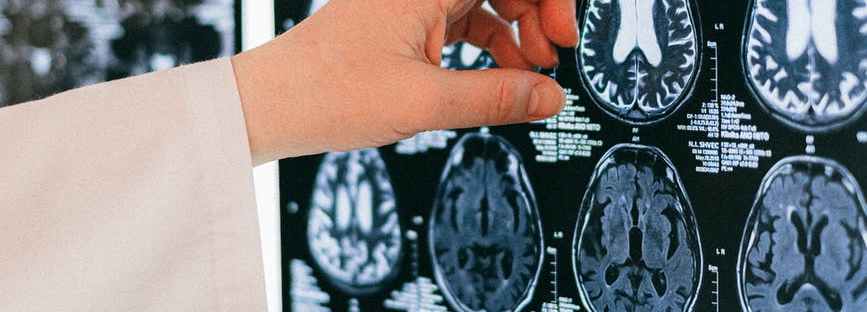
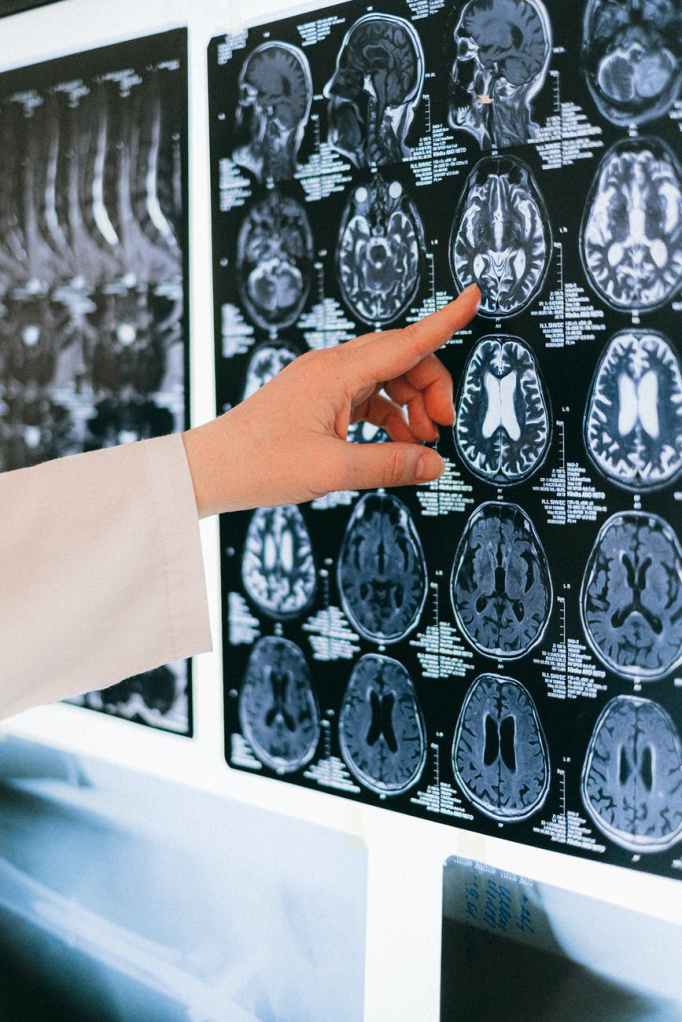
If a baby is malnourished, neural cells can become weak or damaged and this can cause lowered brain function. If a child has little interaction with their caregiver, it can change how emotional and verbal pathways develop and impact their ability to learn. This may have consequences for brain functioning in later life.

Our brains develop from before birth and into adulthood

What happens in a child or young person’s life during these periods can have a significant effect on their brain development.

Positive experiences throughout childhood help to build healthy brains, while experiencing childhood trauma and abuse can harm a child’s brain development (Shonkoff et al, 2015)

Happy Hippo and Kind Goose

#development

Peer pressure and influences

Peer pressure or influence is when you do something you wouldn’t otherwise do, because you want to feel integrated and accepted by your ”friends”.

 Peer influence can be positive or negative.

Some teenagers might choose to try things they usually wouldn’t be interested in, like smoking or behaving in antisocial ways.

According to Dr B. J. Casey from the Weill Medical College of Cornell University, young children are quick and accurate in making judgments and decisions on their own and in situations where they have time to think. However, when they have to make decisions, mainly they are often influenced by external factors like peers. 

Photo by Andrea Piacquadio on Pexels.com
#children, #copiii, #development, attachment theory

Attachment Theory

Attachment is characterized by specific behaviors in children, such as seeking proximity to the attachment figure when upset or threatened (Bowlby, 1969).

Stages of Attachment

Rudolph Schaffer and Peggy Emerson (1964) investigated if attachment develops through a series of stages, by studying 60 babies at monthly intervals for the first 18 months of life (this is known as a longitudinal study).

The children were all studied in their own home, and a regular pattern was identified in the development of attachment.

The babies were visited monthly for approximately one year, their interactions with their carers were observed, and carers were interviewed.

A diary was kept by the mother to examine the evidence for the development of attachment. Three measures were recorded:

• Stranger Anxiety – response to arrival of a stranger.

• Separation Anxiety – distress level when separated from carer, degree of comfort needed on return.

• Social Referencing – degree that child looks at carer to check how they should respond to something new (secure base).

Bowlby suggested that a child would initially form only one primary attachment (monotropy) and that the attachment figure acted as a secure base for exploring the world.

The attachment relationship acts as a prototype for all future social relationships so disrupting it can have severe consequences.

This theory also suggests that there is a critical period for developing an attachment (about 0 -5 years).

If an attachment has not developed during this period, then the child will suffer from irreversible developmental consequences, such as reduced intelligence and increased aggression.

Photo by Yan Krukov on Pexels.com