Being a parent comes with lots of responsibilities, worries, unanswered questions, challenges, headaches BUT the blessing is way greater than the 2 minutes of headache.
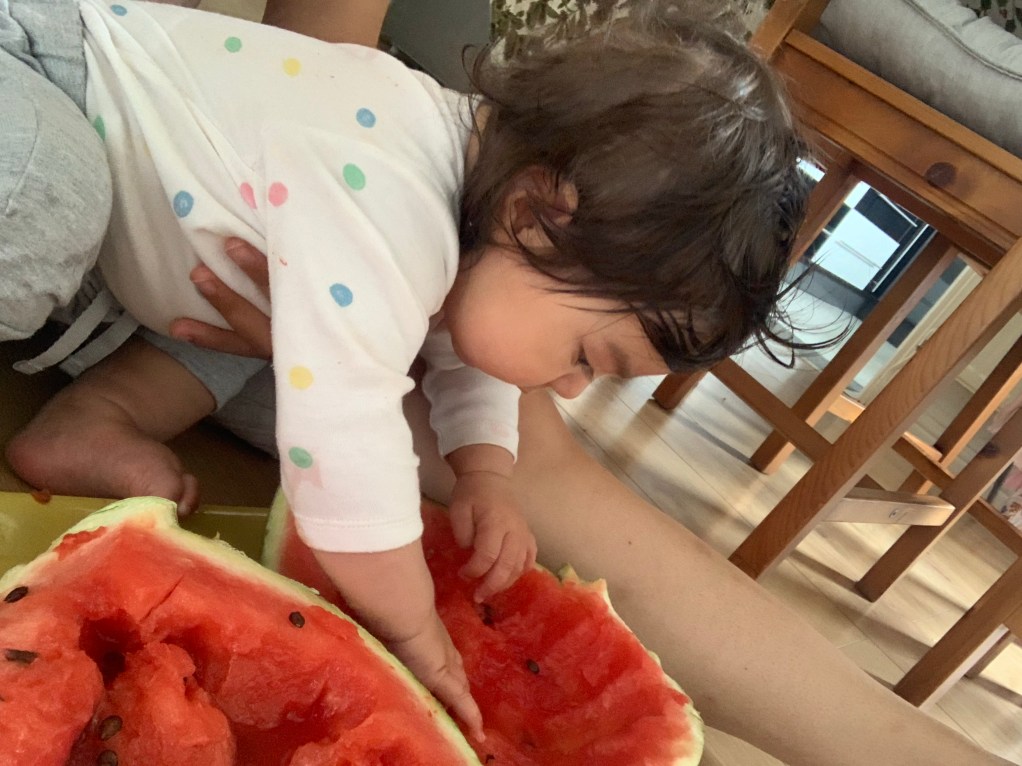
My baby loves playing with food, especially fruits 🍉 many parents will choose not to fulfil their wish but take the little joy away.
I know, playing with food can be categorised as waste of goods but I found a way not to. Here it is, let them be the way you want, you lead them.
Playing with the food can be beneficial for them, the texture, smell, taste, hand eye coordination is important and it’s happening at the same time they having fun.
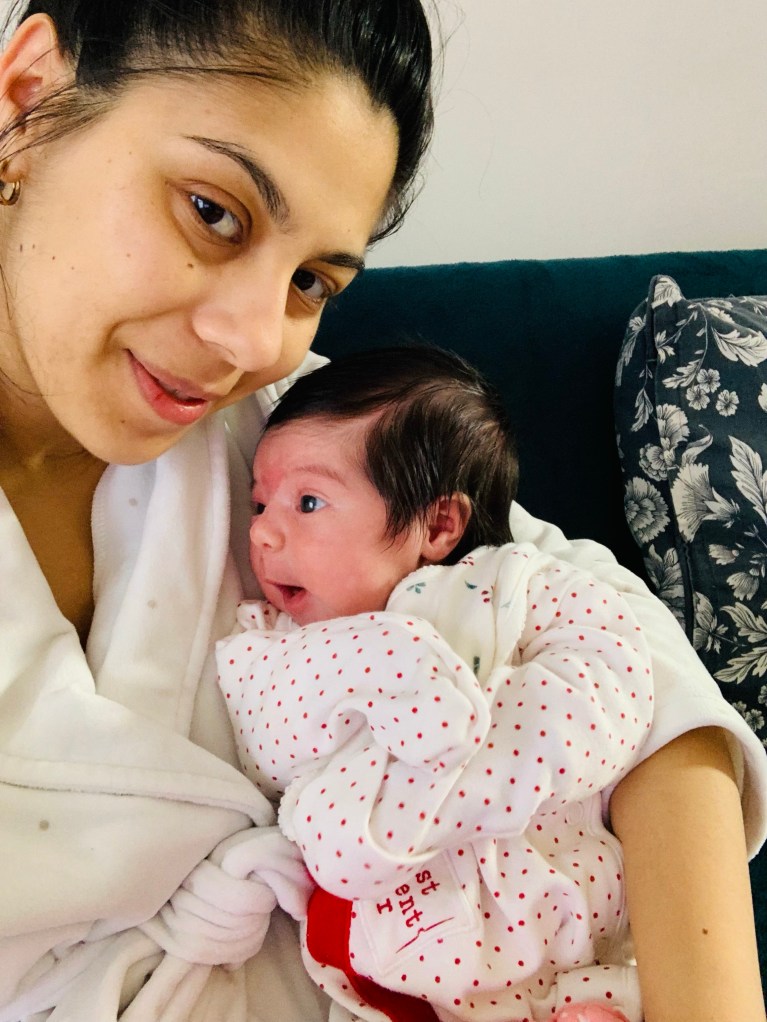
Amelia had fun with the watermelon (rind) think is called.
Aflându-mă în această poziție în urmă cu câteva luni căutam pe net răspunsuri pentru diverse întrebări, gânduri ce nu mi dădeau pace la fiecare lucru nou pe care-l experimentam ca mamă.
Azi, după 6 luni cu Amelia sunt mult mai relaxată, învăț să nu mă agit, îngrijorez dacă Amelia nu a plâns de o oră (exemplu).
Fiind mamă nouă vine la pachet cu o multitudine de ”surprize” plăcute sau mai puțin plăcute…pe care le vom descoperii pe parcurs.
Ai dat naștere unui om, Felicitări! Un dar divin!
După plecarea de la maternitate te lovește realitatea care se aseamănă cu un carusel care te duce sus dar te coboară în grabă cu un mix de emoții pe care trebuie să le controlezi și cu care să te înveți pas cu pas. Totul se schimbă, pare schimbat, nu-i așa?
Acasă în primele zile pari un pic dată peste cap, nu știi cum, ce , de unde să începi?! . STOP! Cel mai important este acum să te calmezi și toată concentrarea să fie pe bebe si tu, voi sunteți miezul, copilul se bazează pe tine cu toate nevoile lui.
Îți recomand ca în primele zile să nu ai musafiri sau casa plină de oameni, o să îți fie dificil oricum să duci la capăt treburile casnice dar mai ales lungile discuții, gălăgia, și verișoara* cea plină de energie care ține bebele în brațe cu orele în timp ce servește cafeluța.
*a se înlocui verișoara cu oricine din rudele tale se aseamănă.
În primele săptămâni, zonele tale intime au nevoie de vindecare și îngrijire cu atenție, după cum ne îndeamnă și multi mum. com
”În timpul nașterii, până la 9 din 10 femei care devin mame pentru prima dată suferă rupturi ale perineului sau au o epiziotomie, o tăietură făcută de un profesionist în timpul nașterii vaginale pentru a face mai mult spațiu pentru copil. Unele incizii sunt mici și afectează numai pielea, în timp ce altele ar putea necesita cusături și pot afecta și mușchiul perineului. Tăieturile sau rupturile din zona perineală pot face pielea sensibilă la atingere și pot creea senzație de usturime la urinare. Chiar dacă nu apar rupturi sau nu aveți o epiziotomie, probabil că veți simți dureri după naștere în zona perineului și a vaginului. De asemenea, corpul dumneavoastră va scăpa de sângele și țesutul din uter care nu mai sunt necesare. Această sângerare se numește lohie și este de obicei abundentă, de un roșu aprins în primele câteva zile, înainte de a se dilua și a dispărea complet în câteva săptămâni”.
Bebe depinde de tine, mami. Iar tu cu siguranță ai nevoie de sprijinul, suportul, înțelegerea partenerului tău.
Doar voi contati. Bucura-te de fiecare zi cu bebele tău. Fotografiază bebele de fiecare dată când ai ocazia, plângi dacă așa simți, mănâncă ciocolata, pe toată fară să te acuzi. Nu trebui să răspunzi mesajelor de ”felicitări” azi, poți răspunde in orice moment te simți pregătită.
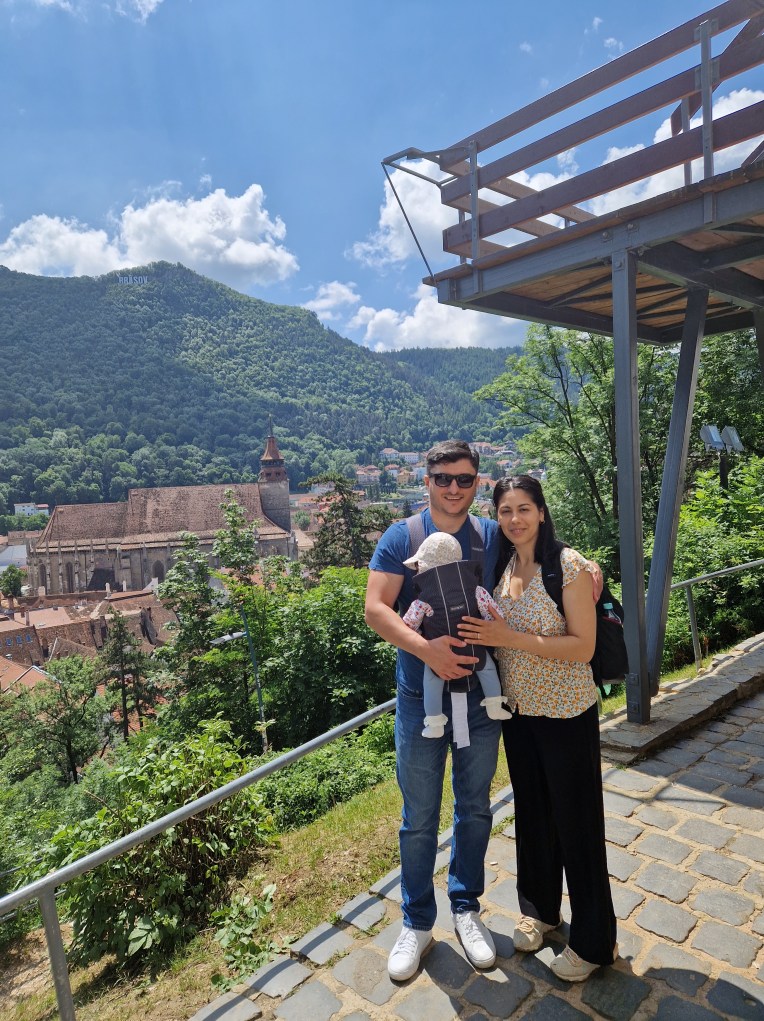
Oh, wait, what else… feels like I forgot to pack something! This is what I have been asking and checking weeks before actually flying out with our baby Amelia. Being a first-time parent comes with lots and thousands of worries/minutes, especially when travelling. We’ve visited our families, friends in Romania for 13 long and tiring days. Baby Amelia was the main character on this holiday, treated like a princess by her grandma, uncles, aunts, cousins, godmother/godfather, our friends, and lots of ‘tanti de la țară’ grannies ( Grandma’s friends). Amelia had her moments when she was happy going from one person to another, but towards the end of the holiday she’s had enough, didn’t want to go to someone else apart from Mommy and Daddy, which was sad for Grandma. I like being on time when a time is set for a meeting, it doesn’t matter if it’s a friend or a stranger, BUT this holiday I had to break this rule as Amelia was falling asleep or pooing at the ‘wrong time’. With a child you have 99 per cent to be late, that’s what I have learnt this holiday. Amelia did amazing flying for the first time; smiling, being curious about what happens around her, grabbing and pulling everything it came to her hand… I found it quite difficult to change her on the aeroplane because the change table/space is cramped! Oh, she managed to have a big explosion exactly when we landed and of course, the bathrooms were locked…so good luck to me trying to cover her not to stain my clothes, the smell was… I can’t describe it! In conclusion, this holiday was full of surprises and different. Our next holiday will b in 2 months, going to Greece!
Last year I enrolled on a CPD course called Positive Parenting. I recommend this course to anyone working with children, parents, carers, anyone who comes in contact with children. It comes in handy now that in less than a week I will be on the road called ”parenting”
This is a lesson I read many times because I found myself and some friends caught in this ”story”.
Being too restrictive builds up resentment and can lead to rebellion- let go of them.
Helping our children make their own decisions and choices instead of telling them what to do it’s far more beneficial. Let them decide with guidance.
Of course, if a child is very young and in danger, we are not going to let them do something that would obviously be harmful, that’s why we are there to supervise, guide, teach them.
Help them develop independence, self worth and self confidence
When I was a child, my parents never taught us any self confidence or worth but a form of ”crazy” independence. Growing up I taught myself how to be confident, know my worth.
Ask for their opinion and show you value it by acting on what they say at least some of the time.
Encourage them to think for themselves, share opinions and options. This will help them to problem solve.
Help them feel included and and confident to contribute. This is essential for teaching them to value their opinions, self confidence and self worth,
Like I said, if you wanna expand your knowledge, skills do this course, it’s amazing how will make you remember of your childhood, your parenting styles or your parents tyoe of parenting.
I studied social work back in Romania, got my degree in 2017, but life brought me in the UK in 2018, so clearly I haven’t had a chance to practice in my country, unfortunately.
What I learnt about safeguarding children in Romania may or may not apply in one of the countries.
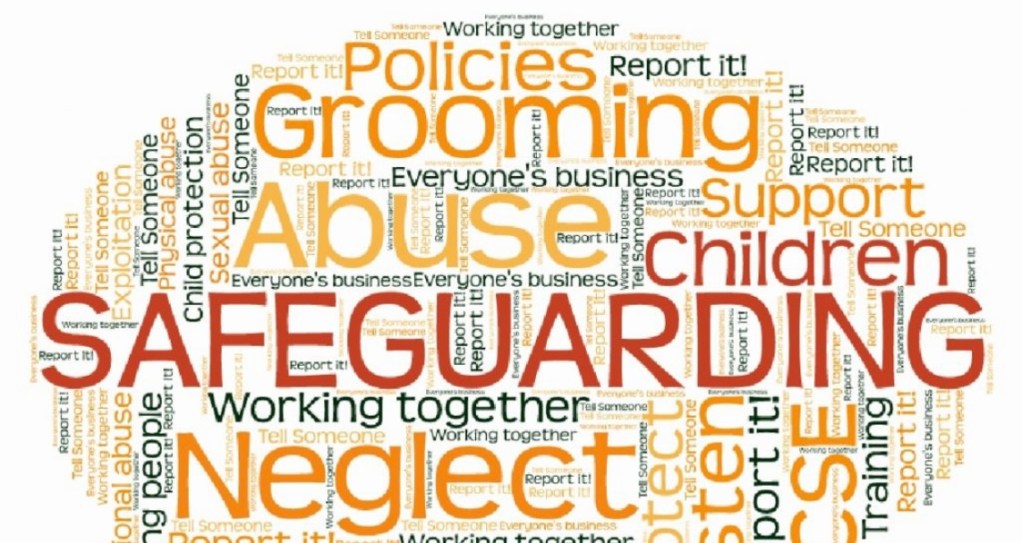
Safeguarding children it’s such an important act for all that comes in contact with our innocent children, keep an eye out to children’s behaviour, their communication and social interaction.
Every day I am reading my books, praying that after the maternity leave I can get a job to put this in practice( to safeguard as an professional) who cares.
Safeguarding is the action that is taken to promote the welfare of children and protect them from harm. Safeguarding means: protecting children from abuse and maltreatment. preventing harm to children’s health or development.
Did we forget what made us happy years ago, when we were kids!?
Let me give you one example from my childhood (there are many examples, I will try giving you one) Ice skating on the main street with my friends. We didn’t have much or been to our big city Ice Skating Ring, but I knew how to skate on our main street, where everyone was walking by, greeting and doing their Christmas shopping. Nice memories! I still love Ice Skating!
What makes us happy as an adult living in these times? Waking up in the morning to get to our jobs or on the salary day when are we trying to sort out the monthly spending? Are we running after fame, money, career, diplomas, buying a big house in which we are most of the time worried about the next electricity bill (see living costs in 2022) thinking that once we have what we wished for we will be happy again? I m not saying it’s a bad thing to have those, but let’s be honest, what makes us happy? How can we increase our level of happiness and live a blessed and joyful life?
Take a minute and write a list of what makes you and your family happy. A trip for 2 days? Spending more time at your grandparent’s house? Meeting with your old friends? Going ice skating with your family? Planning an exotic holiday? Reading your bible, going to church this Sunday? Cooking your partner’s favourite meal? Buying the dress or shoes you wanted for a while now? Giving a Christmas present to a family in need? Or just having a coffee in the shopping centre?
What makes me happy is waking up early in the morning to drink my coffee. My husband gave me a good night kiss(he also gives one to my baby bump). Eating my favourite chocolate. Good news from my large family. Feeling my baby moving. Supporting my family when is needed and the list is not stopping here.
To to sum up…Enjoy the good coffee, have fun on your holiday, buy the dress– they are all good and fine and bring bright moments into our lives.
Do more of what makes you happy, and be less worried and stressed.